Reishi and Cordyceps: What the Research Actually Says
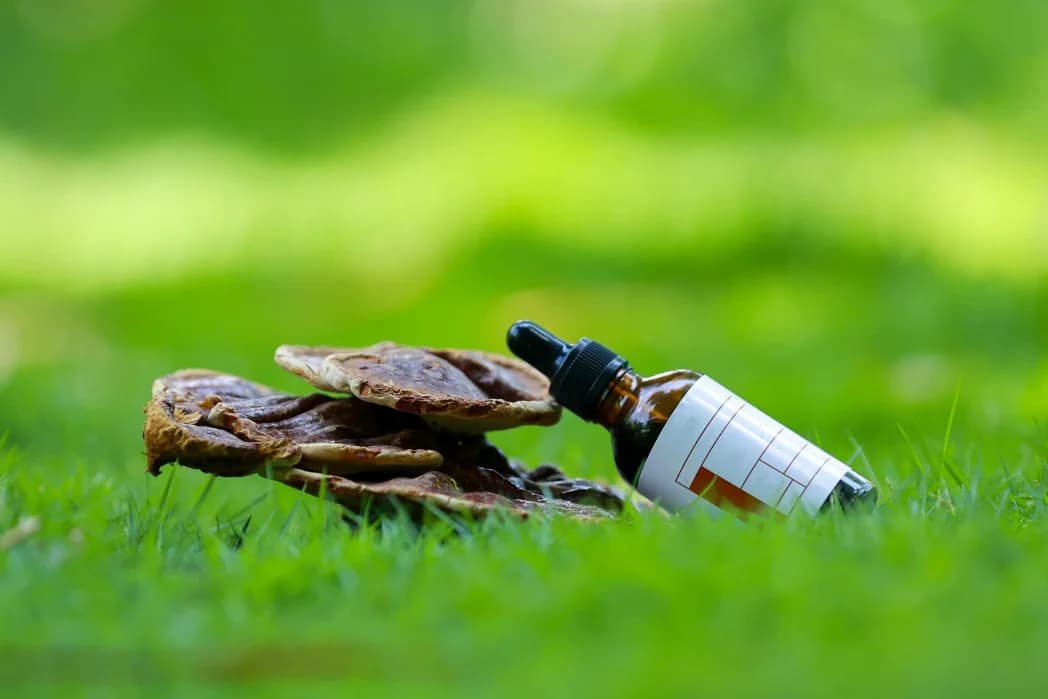
Medicinal mushrooms occupy an odd space in Indian wellness retail right now — everywhere on Instagram, rarely explained with any precision. We sell reishi slices and cordyceps militaris powder ourselves, so we have a direct financial interest in this category, which is exactly why we think it's worth being unusually careful about what we claim versus what's actually been shown.
Ganoderma lucidum (reishi): the compounds and what they're linked to
Reishi is unusual among cultivated mushrooms in that its value is described as primarily pharmaceutical rather than nutritional — nobody eats it fresh as food, partly because it's simply too woody and bitter to be palatable, which is why it's traditionally simmered for hours into a decoction, or taken as an extract or powder. Old Chinese medical texts call it the "mushroom of immortality," a title that tells you more about historical reverence than modern evidence.
The active compounds identified in reishi include ganoderic acid, polysaccharides and triterpenes. Research literature associates these compounds with a fairly long list of investigated effects — anti-oxidative, anti-tumour, anti-microbial, anti-inflammatory activity, along with traditional use for liver conditions (hepatopathy, chronic hepatitis), kidney conditions (nephritis), hypertension, arthritis, insomnia, bronchitis, asthma and gastric ulcers. That's a genuinely long list, and that length itself should raise a small flag: a compound studied for this many different conditions usually means the evidence for each individual claim is preliminary rather than conclusively established. Reference therapeutic dosages cited in mushroom pharmacology literature run from 3-12 grams of fruiting body powder daily, or smaller amounts of concentrated extract — figures that exist in the literature, but which are not the same thing as a clinically validated treatment protocol for any specific condition.
Cordyceps: two different organisms people conflate
This is a distinction we make a point of explaining because it affects both price and supply chain honesty. Cordyceps sinensis — known in Hindi as keeda jadi — is a genuinely strange organism: a fungus that parasitises a caterpillar larva in the wild, found at altitudes above 3,800 metres in Sikkim, Uttarakhand and Himachal Pradesh. Wild-harvested Cordyceps sinensis is scarce enough to trade for more than gold by weight in some markets, and it carries a long traditional reputation as a tonic for energy, stamina, libido and endurance.
Cordyceps militaris is a different, related species that can be cultivated commercially — grown on grain or a soy-based medium rather than harvested from a living caterpillar in a Himalayan meadow. This is the species in our own cordyceps powder, and we say so plainly, because a customer paying premium prices for what they believe is wild-harvested keeda jadi and receiving lab-cultivated C. militaris instead deserves to know the difference upfront, not discover it from a technical label. The active compound most associated with C. militaris is cordycepin, studied across a genuinely wide range of investigated activities — anti-inflammatory, antioxidant, anti-tumour, immunomodulatory and several others. As with reishi, breadth of investigation is not the same as depth of proven clinical effect for any one use case, and we'd rather say that plainly than let the length of the list imply more certainty than exists.
Turkey tail and the supplement-versus-drug distinction
Turkey tail (Trametes versicolor) is arguably the most-studied medicinal mushroom in the modern research literature, largely because of proteoglycan compounds called PSP and PSK, which have been through Phase I, II and III randomised controlled trials in some contexts — a genuinely more advanced evidence base than most mushroom compounds can claim, with documented research interest around stomach, colorectal, oesophageal and breast cancer contexts specifically. This doesn't mean turkey tail supplements sold at retail are equivalent to a pharmaceutical treatment; PSK as an adjunct therapy in some of that research was used in specific clinical contexts under medical supervision, not as an over-the-counter wellness product.
This points to a distinction worth understanding generally: drugs go through mandated clinical trials proving safety and efficacy before sale. Supplements — which is the legal category almost all consumer medicinal mushroom products fall into, including ours — are regulated as food-adjacent products, not medicine, and are not required to prove therapeutic efficacy the way a drug must. That's not a criticism of the category; it's simply the honest regulatory reality, and it's why we describe our reishi and cordyceps products as traditional wellness use, not treatment.
What we actually tell customers
If you ask us directly whether reishi will cure a specific condition, the honest answer is no — nothing we sell cures anything, and we'd be misrepresenting the science to imply otherwise. What we can say, grounded in the ICAR-DMR training and the wider pharmacology literature, is that these are foods and traditional preparations with a long history of use and a growing but still early body of research into specific bioactive compounds. If you're taking blood thinners, immunosuppressants, or have a diagnosed condition you're managing medically, talk to your doctor before adding a concentrated mushroom extract to your routine — these compounds are biologically active enough that interactions are a real, if generally under-discussed, consideration.
We'd rather lose a sale to honesty than win one on a claim we can't stand behind. That's a slower way to build a supplement business, but it's the only version of this business we're interested in running.
Other medicinal mushrooms worth knowing about
Reishi and cordyceps get the most retail attention, but the medicinal mushroom category taught in our training extends further, and it's worth knowing the landscape even if we don't stock every species ourselves. Lion's mane (Hericium erinaceus) contains cyathane diterpenoids, known as hericenones and erinacines, studied for potential neuroprotective effects and cognitive support, including early research interest around conditions like Parkinson's and Alzheimer's — genuinely promising early-stage research, not an established treatment. Grifola frondosa, known as maitake or "hen of the woods," contains a specific branched beta-glucan structure studied for antioxidant and anti-inflammatory activity. Schizophyllum commune produces a compound called schizophyllan, which has been studied in cancer treatment contexts under the name sonifilan in some research literature. Auricularia polytricha, a wood ear relative, is studied for anti-inflammatory polysaccharide activity, alongside its long culinary use for texture in Chinese cooking.
The pattern across all of these is consistent: a specific bioactive compound class, a body of research ranging from early laboratory studies to (in rarer cases like turkey tail) actual clinical trials, and traditional use that predates the modern research by centuries or longer. None of this changes our basic position — food and traditional wellness use, not medical treatment, and always worth discussing with a doctor if you're managing a diagnosed condition or taking other medication.
How we'd want a customer to shop this category
If you're new to medicinal mushrooms and trying to decide what, if anything, to add to your routine, our honest suggestion is to start from what you're actually trying to support — general wellness and traditional tonic use (reishi), stamina and traditional energy support (cordyceps), or general immune-supportive nutrition (turkey tail, if you can find a reliable source) — rather than starting from whichever product has the most dramatic marketing claims attached. Read the species name on the label, not just the marketing name; know whether you're getting fruiting body powder or an extract, since dosing and concentration differ meaningfully between the two; and treat any product promising to cure or reverse a specific diagnosed condition with real scepticism, regardless of which brand is selling it, ours included.