Why Oyster Mushroom Is Still the Best First Crop in India
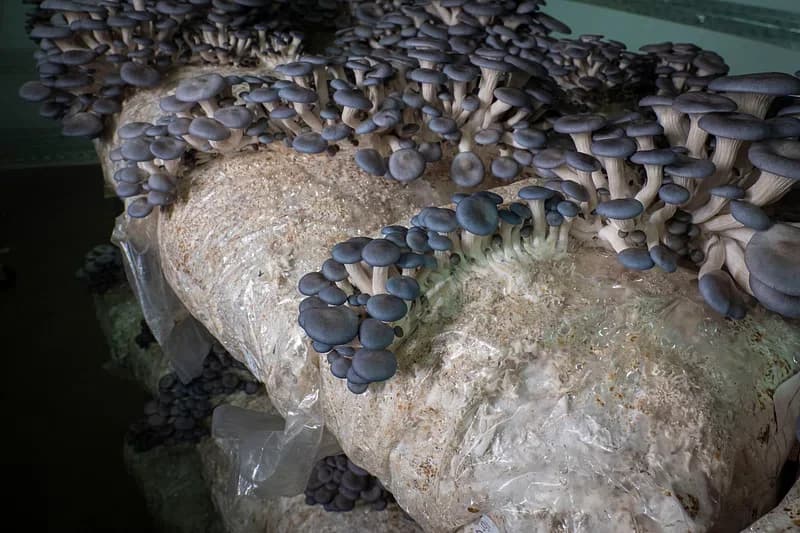
When someone comes to us wanting to start a mushroom business with no prior farming experience and a modest budget, we point them at oyster mushroom almost every time — not because it's trendy, but because the economics genuinely work better for a first-timer than any other species we consult on. Here's why, with the numbers that actually matter.
Why oyster mushroom specifically
Pleurotus, commercially known as oyster mushroom and called dhingri in Hindi, holds roughly 21% share of global mushroom production and about 17% of Indian production — a meaningfully large slice of the market, which tells you it's not a niche crop. Several structural features make it the default recommendation for new growers:
Low-cost infrastructure. Unlike button mushroom, which typically needs a temperature-controlled growing room and a compost-based substrate that requires a proper composting yard, oyster mushroom can be cultivated using simple bag culture on straw substrate, in a room that only needs shading and humidity control, not refrigeration-grade climate control. Rack systems or hanging methods both work, and neither demands specialised construction.
Short crop cycle. Spawn run typically takes 15-20 days depending on the Pleurotus strain, and the first flush can be ready to harvest as little as 13-14 days after bags are "ready to fruit." A full crop cycle — spawn to final harvest — runs about two months, considerably faster than many alternative crops, which means a grower sees cash flow and learns from mistakes faster than with slower-cycle crops.
Round-the-year cultivation without controlled environment. Oyster mushroom tolerates a wider temperature band than temperate species like button mushroom, which in northern India is typically grown only in winter, with sheds disassembled in summer. Oyster and milky mushroom, by contrast, are tropical and sub-tropical species suited to India's actual climate for most of the year — which is part of why ICAR-DMR training specifically flags that India, despite being a largely tropical country, still grows disproportionately more temperate mushroom than the climate suits, and encourages growers toward better-adapted tropical and sub-tropical species instead.
The numbers, at minimum viable scale
For a small first unit, the reference figures taught in cultivation training run roughly like this: 50kg of dry substrate, 5kg of spawn, around 30 bags, yielding 30-60kg of mushroom across a two-month cycle. That translates to roughly 100-150 bags per 100 square feet of floor space, with each bag using about 5kg of compost or straw substrate in a standard 12x18 inch bag.
At commercial scale, the reference unit is closer to 15 tonnes per year — around 2,500 bags per two-month cycle, using roughly 12.5 tonnes of compost, and requiring about 8,300 cubic feet of space across two rooms (roughly 30x14x10 feet each). Practically, that works out to around 300 bags per 1,000 cubic feet of room volume — a useful rule of thumb if you're trying to size a growing room against a production target.
Different Pleurotus species have different environmental sweet spots, and getting this wrong is a common first-time mistake. P. ostreatus runs a spawn run temperature around 24°C with 15-20 days to complete, needing 85-90% relative humidity during fruiting and fairly low light (1,000-2,000 lux — essentially bright shade, not direct sun). P. citrinopileatus (yellow oyster) needs slightly warmer conditions, 24-29°C, and a longer 18-25 day spawn run. P. djamor (pink oyster) is faster and warmth-loving, completing spawn run in just 7-10 days at 24-30°C, but needs tighter humidity control at 80-85%. Choosing the wrong strain for your region's climate is one of the more avoidable failure modes we see in early consultations — a grower in a hot, humid coastal district trying to run a strain suited to hill-station conditions, for instance.
Why this matters for FPO and cooperative planning
The low capital threshold is exactly why oyster mushroom shows up so often in Farmer Producer Organisation and Self-Help Group cultivation programmes across India, including the FPO consultations we run for growers in Uttar Pradesh. A group of smallholders can each run a small bag-culture setup on agricultural waste they already have access to — paddy straw, wheat straw — pool their output, and reach a viable collective volume without any single member needing to invest in industrial infrastructure. This "hub and spoke" model, where individual small producers feed into a shared processing or marketing point, is one of the more practical structures we recommend when a group is starting from near-zero capital.
Where new growers actually get stuck
Cultivation success is one thing; the recurring stumbling block we see afterward is market access, not growing skill. It's genuinely not hard to get an oyster mushroom crop to fruit if you follow the substrate, spawn and humidity parameters correctly. What trips people up is not having a buyer lined up before the first harvest comes in, or underestimating how quickly fresh oyster mushroom needs to move — same-day to next-day sale in most cases, given how perishable fresh mushrooms are. This is why our consultation conversations always cover the sales side alongside the growing side: knowing your buyer, or having a plan to dry and value-add your own harvest (which is exactly the route we took ourselves, turning surplus and off-grade mushroom into dried product and mushroom-powder snacks rather than losing it to spoilage) matters as much as getting the substrate ratio right.
Substrate choice: why straw beats almost everything else
One detail that's easy to overlook when comparing oyster mushroom to other crops is just how forgiving it is about substrate. While specialty substrates and supplemented formulations exist for growers chasing maximum yield, the baseline substrate for oyster mushroom is agricultural waste that most rural growers in India already have sitting around at negligible cost — paddy straw, wheat straw, and in some regions sugarcane bagasse or cotton waste. This is a genuinely different economic proposition from button mushroom, which needs a properly prepared compost built from a defined recipe (typically wheat straw, poultry manure or similar nitrogen source, and gypsum, composted over several weeks under controlled conditions) before spawning can even begin. Oyster mushroom substrate preparation is comparatively simple: chop the straw, pasteurise it (often via hot water treatment rather than industrial steam sterilisation, which keeps costs low), pack it into bags with spawn, and you're underway. For a first-time grower testing the waters before committing serious capital, this lower barrier to a first successful batch is often the difference between someone continuing into a second cycle and someone giving up after one disappointing attempt with a harder crop.
What we tell growers who ask "which oyster strain should I use"
This is one of the most common specific questions in our consultations, and the honest answer is always "it depends on your local climate, not on which strain is trendy." A grower in a cooler hill-station climate is often better served by P. ostreatus or its Florida variant, both suited to a moderate 24°C spawn-run temperature. A grower in a hot, humid plains district — much of Uttar Pradesh, for instance, especially outside the short winter window — is often better matched to a warmth-tolerant strain like P. djamor (pink oyster) or P. membranaceus, both of which run comfortably at 24-30°C and complete spawn run in as little as a week, versus the 15-20 days needed by cooler-climate strains. Matching strain to actual regional temperature data, rather than assuming one "standard" oyster mushroom variety works everywhere, is a small piece of technical guidance that prevents a surprising number of avoidable first-season failures.