Cultivated Mushrooms Are Not a Gamble — Here's Why
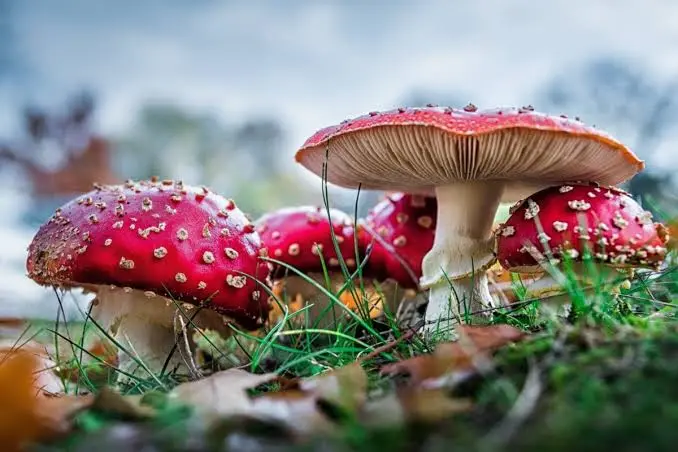
We hear a version of this sentence often enough that it's worth addressing head-on: "I don't really eat mushrooms, some of them are poisonous, isn't it risky?" It's a reasonable-sounding worry, and it's also almost entirely misapplied to the situation of buying a packet of dried oyster mushroom or a box of button mushrooms from a shop. Here's the distinction that actually matters, and why conflating the two categories does a disservice to a genuinely safe, genuinely nutritious food.
Two completely different risk profiles
Wild foraging and commercial cultivation are not the same activity wearing different clothes. They're different enough that treating them as one category is a bit like refusing to eat farmed chicken because you're worried about accidentally eating a wild bird that turned out to be diseased.
Wild mushroom foraging genuinely does carry risk. Identifying an edible wild mushroom correctly, distinguishing it from a toxic lookalike, requires real expertise — spore prints, gill structure, habitat, sometimes microscopic features. Fatal poisonings from wild mushroom misidentification happen every year, globally, including in India, and they're almost always the result of someone picking an unfamiliar mushroom from a forest or field and eating it without proper identification. This is a real risk and we're not going to pretend otherwise. If you don't have training in mushroom identification, don't eat anything you've foraged yourself. That's not a Shroomly-specific rule; it's close to universal advice from every mycological society and food safety body that publishes guidance on the topic.
Commercially cultivated mushrooms are an entirely different situation. Button mushroom (Agaricus bisporus), oyster mushroom (Pleurotus species), milky mushroom (Calocybe indica), shiitake (Lentinula edodes) and paddy straw mushroom (Volvariella volvacea) — the species that make up the overwhelming majority of what's sold commercially in India — are grown from known, tested spawn strains, in controlled substrate conditions, by growers who are producing a single identified species at scale. There's no ambiguity about what species is in the bag. The genetics are known before the spawn is even inoculated into the compost or straw.
Why the controlled-cultivation model actually works
It helps to understand what "cultivation" concretely involves, because the process itself is the safety mechanism. A commercial oyster mushroom unit, for instance, starts with spawn — mycelium grown on a sterile grain medium, produced by a specialist spawn lab, not collected from the wild. That spawn is inoculated into pasteurised or sterilised substrate, typically paddy straw, wheat straw or a similar agricultural byproduct, packed into polythene bags. The whole batch grows from one known genetic source under monitored temperature and humidity, and what fruits out of that bag is exactly what was inoculated — no wild variability, no risk of a toxic species creeping in.
This is different in kind from foraging, where every individual mushroom found in the field is its own identification problem. Commercial cultivation solves the identification problem once, at the spawn production stage, and then scales a known-safe organism.
Where actual caution is warranted with cultivated mushrooms
None of this means cultivated mushrooms are risk-free in every sense — just that the risk category is different. The real considerations with farmed mushrooms are food-safety ones common to most fresh produce: proper post-harvest handling (mushrooms are highly perishable, roughly 90% water with no protective skin, so poor cold-chain handling can lead to spoilage-related food safety issues, not toxicity from the mushroom itself), buying from FSSAI-licensed and traceable sources, and standard hygiene in storage and preparation. These are the same categories of caution you'd apply to leafy greens or dairy, not a mushroom-specific danger.
Medicinal mushroom extracts and powders — reishi, cordyceps, turkey tail and similar — deserve their own separate caution, but again, it's not about species misidentification. It's about dosage, drug interactions (some of these compounds have documented interactions with blood thinners and immunosuppressants), and realistic expectations about what the research actually supports, which we've written about separately.
The practical takeaway
If someone tells you they avoid mushrooms because "some are poisonous," the honest response is: that's true of wild mushrooms, and it's a good reason to never eat an unidentified wild mushroom. It's not a reason to avoid the button, oyster, milky or shiitake mushrooms sold in a shop, farmed from known spawn under controlled conditions specifically to eliminate that identification risk. The two situations share a word — "mushroom" — and almost nothing else in terms of actual risk profile.
This is exactly the kind of distinction we spent real time on during our ICAR-DMR training, because it's one of the most common pieces of mushroom misinformation we encounter in India, and one of the easiest to correct with a plain explanation rather than a dismissive one.
A note on imported and processed mushroom products
The same logic extends to processed mushroom products you might buy — dried slices, powders, or mushroom-based supplements. The safety question here isn't about species identification anymore (that risk was already resolved at the spawn and cultivation stage) but about supply chain traceability: was this dried under hygienic conditions, packed under a valid food licence, and stored correctly through transport. This is a food-safety question, not a mycology question, and it's exactly why we push traceability and FSSAI licensing as hard as we do on this site. When you buy dried oyster mushroom from a licensed, traceable source, you're not taking on foraging risk at any point in that chain — you're taking on the same, ordinary food-safety considerations you'd apply to any packaged dried food, which is a meaningfully smaller and better-understood category of risk.
What we'd actually tell a nervous first-time buyer
If someone is trying mushrooms for the first time specifically because they've overcome this worry, our practical advice is simple: start with a common, widely cultivated species like button or oyster mushroom from a traceable source, cook it thoroughly (mushrooms are typically eaten cooked, not raw, in Indian cuisine, which also addresses some texture and digestibility considerations separate from the safety question), and treat the wild-versus-cultivated distinction as the only safety line that actually matters. Once that's clear, the rest of the mushroom-safety conversation is really a nutrition and quality conversation, not a danger conversation — which is a much more comfortable place to start exploring the category from.